
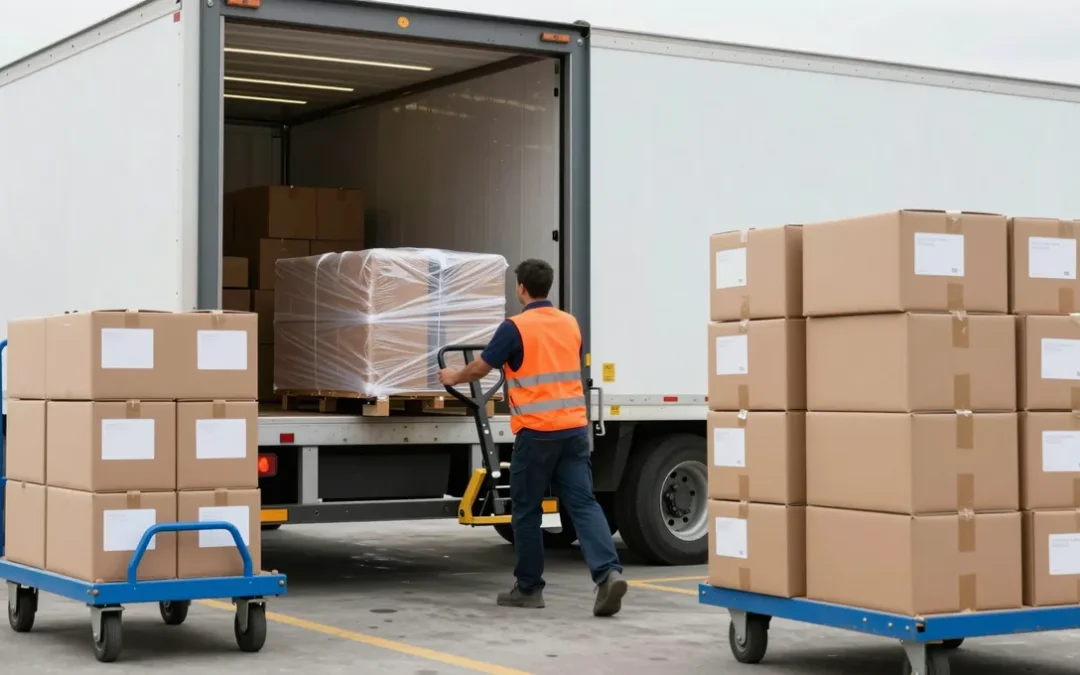
Not every shipment needs to be stored. Sometimes the fastest and cheapest option is to move goods straight from the truck that brought them to the truck that takes them onward. That is called cross-docking. This guide explains what cross-docking is, how it works, its benefits and when it makes sense for your business.
What is cross-docking?
Cross-docking is a warehouse process where inbound goods are unloaded, sorted and loaded onto outbound vehicles with little or no time in storage, usually within a day or two. The goods cross from the receiving dock to the shipping dock, which is where the name comes from.
How cross-docking works
- Inbound arrival. A truck or container arrives at the warehouse dock with goods for one or more destinations.
- Unloading and checking. Pallets or cartons are unloaded, counted and checked against the paperwork.
- Sorting. Goods are sorted by destination, customer or store. Pallets may be broken down and rebuilt.
- Labelling. New labels or paperwork are added if the next leg needs them.
- Outbound loading. Goods are loaded onto the outbound van, truck or LTL shipment and leave the same day or soon after.
Types of cross-docking
| Type | How it works | Example |
|---|---|---|
| Pre-distribution | Goods arrive already assigned to customers or stores | A supplier sends pallets pre-labelled for 5 stores |
| Post-distribution | Goods are assigned to destinations after they arrive | An importer decides where stock goes once a container lands |
| Consolidation | Several small inbound loads are combined into one outbound load | Parcels from different suppliers combined into one truck |
| Deconsolidation | One large inbound load is split into smaller outbound loads | A container split into pallets for different customers |
Benefits of cross-docking
- Lower storage costs: goods spend little or no time in the warehouse.
- Faster delivery: products reach customers or stores sooner.
- Less handling: fewer touches mean fewer chances of damage.
- Better use of trucks: loads can be combined to send fuller vehicles.
When cross-docking makes sense
- Products that move fast and do not need to be stored, such as store replenishment.
- Imports that arrive in one container but go to several customers.
- Promotional or seasonal stock that has to reach stores by a set date.
- Shipments that need re-labelling or re-palletizing before the next leg.
Cross-docking is less suitable when you do not yet know where stock is going, when demand is unpredictable, or when you need to keep safety stock. In those cases, storage and fulfillment from a warehouse is the better fit.
Cross-docking vs traditional warehousing
| Cross-docking | Traditional warehousing | |
|---|---|---|
| Time in the building | Hours to a day or two | Weeks or months |
| Main cost | Handling and transport | Storage plus handling |
| Best for | Known destinations, fast-moving goods | Stock waiting for orders |
| Planning needed | High: inbound and outbound must line up | Lower |
Tips for successful cross-docking
- Share delivery schedules and destinations with your 3PL before goods arrive.
- Make sure pallets and cartons are clearly labelled with the destination.
- Send accurate paperwork, such as packing lists and bills of lading, with each load.
- For retailers, follow their routing guide. See shipping to retailers in Canada.
Dock services in Mississauga
Newsom 3PL offers dock services at our Mississauga warehouse near Toronto Pearson, including dock drop-off and pick-up, freight redirection, and sorting and segregation. Goods can move on by 16-foot cargo van, 26-foot trailer or LTL, with delivery across the GTA and shipping to the rest of Canada and the US. When stock needs to stay longer, we can store it in our warehouse. See B2B distribution or request a quote.
Frequently asked questions
What is cross-docking in simple terms?
It means moving goods from an incoming truck to an outgoing truck at a warehouse dock, with little or no storage in between.
How long do goods stay in a cross-dock?
Usually less than 24 to 48 hours. The aim is to move goods on as quickly as possible.
Is cross-docking cheaper than storage?
Often, yes, because you avoid most storage costs. It does need good planning so inbound and outbound loads line up.
What is the difference between cross-docking and transloading?
Transloading usually means moving goods from one type of transport to another, such as from a container or rail car to a truck. Cross-docking focuses on sorting and moving goods through a dock quickly. The two often overlap.